
“The future of urbanisation is not about building bigger cities, but creating better places to live” – Experts call for people-centric planning, affordable housing, sustainable development and stronger public-private partnerships at Ahmedabad symposium.
AHMEDABAD, October 30, 2026: As India moves towards becoming one of the world’s leading urbanised nations by 2050, the need to rethink the way cities are planned, developed and managed has become more important than ever. Emphasising that the true success of urban development lies not in the size of cities but in the quality of life they offer, leading urban planners, policymakers, academicians and industry experts called for a new vision of affordable, inclusive, sustainable and livable cities at a special symposium organised by GREMI (Ganesh Real Estate Management Institute) in Ahmedabad on the occasion of World Cities Day.
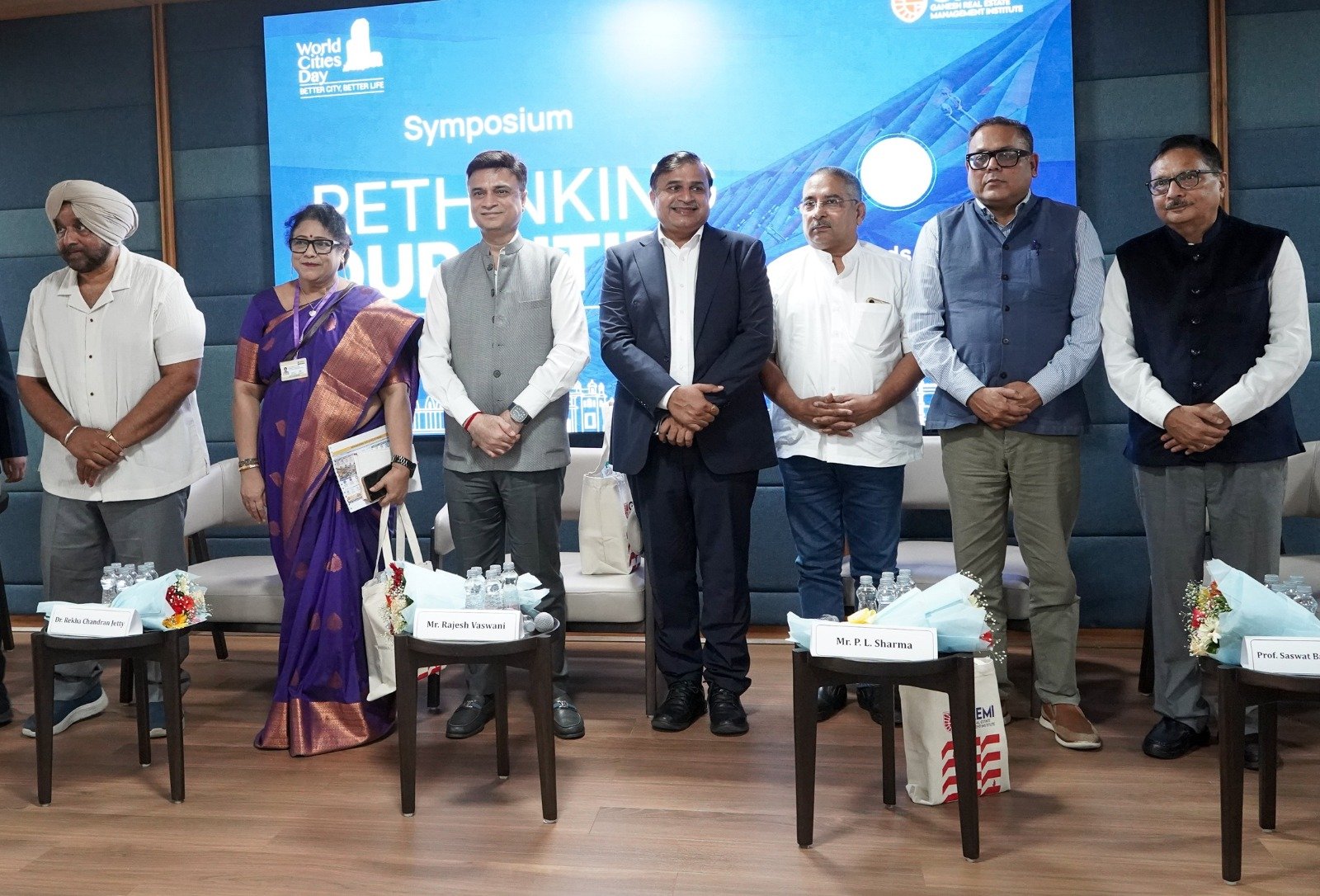
The symposium, themed “Rethinking Our Cities: Urban Regeneration, Adequate Housing and Better Use of Existing Urban Assets,” provided an important platform for meaningful dialogue on the challenges and opportunities shaping India’s urban future. The discussions focused on making cities more people-centric by prioritising affordable housing, revitalising existing urban neighbourhoods, strengthening civic infrastructure and ensuring sustainable utilisation of land and other urban resources.
Setting the context through his insightful thematic presentation, “Cities at a Crossroads,” Dr. Anil Kashyap, Director General, GREMI, highlighted the critical choices facing India as it prepares to lead the next global wave of urbanisation by 2050. He emphasised that urban growth must move beyond physical expansion towards improving the quality, sustainability and inclusiveness of existing urban environments. With nearly 45 per cent of the world’s population already living in cities, he stressed the importance of creating urban spaces that offer dignity, opportunity and a better quality of life for every citizen.
The panel discussion was moderated by Dr. Amarjit Singh, IAS (Retd.), Former Chairman, RERA Gujarat and Adjunct Professor, GREMI. The distinguished panel comprised Dr. Rekha Chandran Jetty, Director, Institute of Architecture and Planning, Nirma University; Prof. Saswat Bandyopadhyay, Faculty of Planning, CEPT University; Mr. P. L. Sharma, Former Chief Town Planner, Government of Gujarat; and Mr. Rajesh Vaswani, Founder, Venus Group and Chairman, CREDAI Ahmedabad.
Affordable housing emerged as one of the most significant concerns. Experts highlighted the growing gap between property prices and household incomes, noting that the global house price-to-income ratio has increased from 9.4 years in 2010 to 11.7 years today. They cautioned that redevelopment must not become a reason for displacing existing communities. Instead, integrated neighbourhood-level regeneration, supported by active participation of residents, should ensure that development benefits the people who have made these neighbourhoods their homes.
The panel also underlined that a truly livable city requires much more than impressive buildings and modern infrastructure. Walkable streets, accessible public spaces, clean air, safe drinking water and a healthy environment are equally essential. Emphasising evidence-based decision-making, the experts observed that “Pictures tell stories, but numbers rewrite them.”
On the financial and governance front, speakers called for stronger municipal finances, innovative revenue mechanisms such as land value capture and long-term investment strategies. They advocated performance-based urban regulations, integrated planning and greater accountability, citing GIFT City as an example of performance-based regulation.
The discussion further highlighted the need for stronger coordination among government agencies, academia, industry and citizens, replacing fragmented decision-making with collaborative governance and meaningful public participation.
The symposium concluded with a powerful message: India’s urban future must be measured not by how tall its buildings rise, but by how well its cities serve the people. Through visionary leadership, responsible development and collective participation, India can create cities that are not merely bigger, but better places to live, work and thrive.